A tall commercial flagpole flying a vibrant custom flag is a great asset for your business—until something breaks. Over time, constant exposure to wind, rain, and UV rays will wear down both the flag and the mechanical components of the pole.
If you own a permanent flagpole, here are the three most common problems you will encounter and how they are repaired.
Quick Flagpole Problem Diagnosis
| Symptom | Likely cause | Safe first step | Typical repair |
|---|---|---|---|
| Rope will not move | Tangled halyard or seized pulley | Stop pulling and inspect from ground level | Untangle, rethread, or replace hardware |
| Rope has disappeared into the pole | Broken internal halyard | Secure the area | Access the pole top and install a new halyard |
| Flag wraps around the pole | Fixed or damaged truck, missing anti-wrap hardware | Lower the flag during strong wind | Service the truck or add rotating hardware |
| Pole moves at ground level | Loose sleeve, base, anchors, or foundation | Clear the area immediately | Structural inspection and base or foundation repair |
| Metal hardware is orange or pitted | Corrosion | Do not force seized parts | Replace affected fasteners, cleats, or truck |
1. A Broken or Jammed Halyard (Rope)
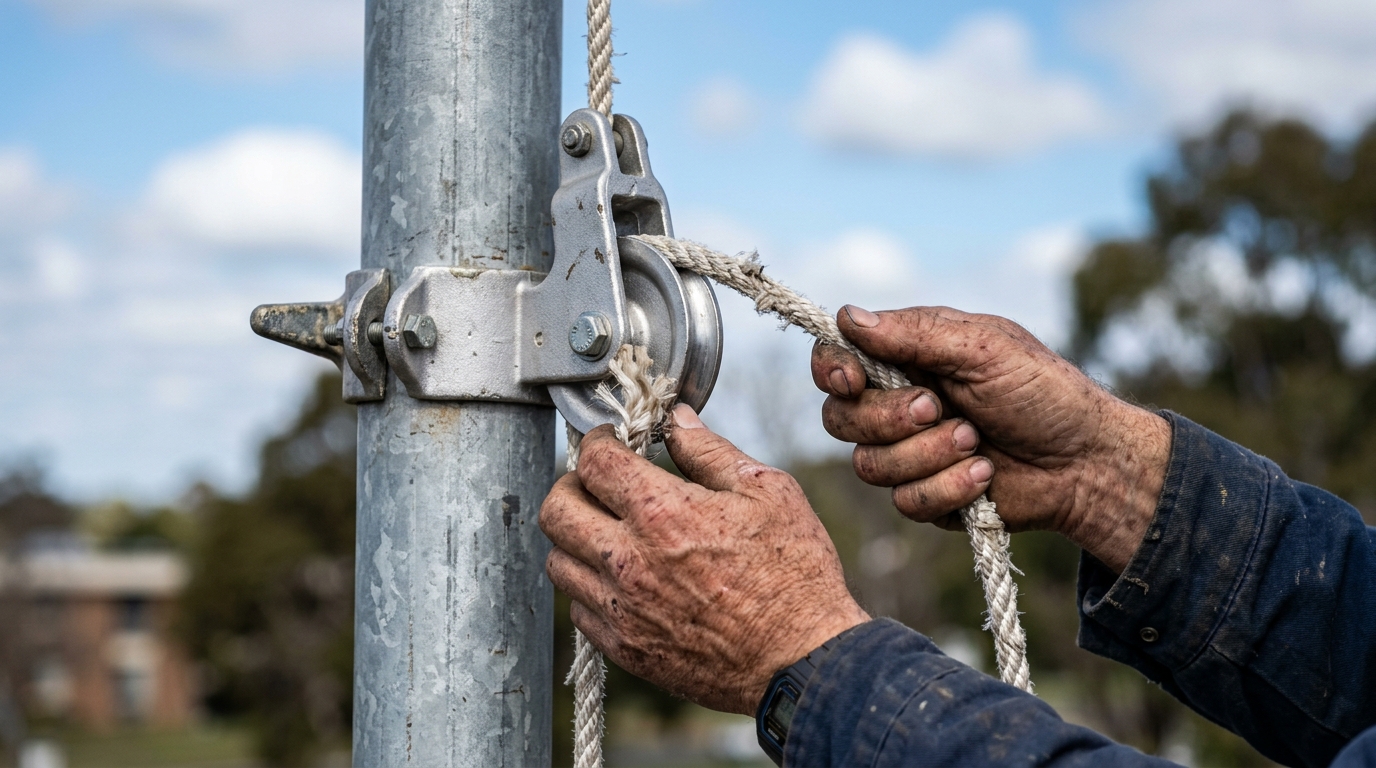
The halyard is the rope used to raise and lower the flag. This is the most common point of failure. Over time, nylon and polyester halyards degrade in the sun and eventually snap.
The Fix: If the halyard snaps while the flag is down, you have a major problem. The rope has fallen out of the pulley (truck) at the very top of the pole. You cannot rethread it from the ground. A professional flagpole repair company will have to bring a bucket truck or a specialized climbing harness to reach the top of the pole and rethread a new halyard.
If the rope is still present but difficult to move, do not keep pulling. Excess force can wedge the rope beside the pulley or damage the truck. Check whether the flag clips, counterweight, or rope are caught around the pole. A technician can then determine whether the repair is limited to the halyard or requires new top hardware.
Signs a halyard should be replaced
- Visible fuzzing, glazing, flat spots, or broken fibres
- A rope that has become stiff, brittle, or noticeably thinner
- Knots or splices passing poorly through the pulley
- Repeated slipping at the cleat or internal locking mechanism
2. A Broken Truck or Pulley
The truck is the ornament/pulley system at the very top of the pole. If the pulley wheel cracks, seizes with rust, or gets jammed with debris, you will not be able to raise or lower the flag smoothly.
The Fix: Similar to a broken halyard, repairing the truck requires reaching the top of the pole. Professionals will remove the old truck, inspect the top of the aluminum or fiberglass pole for damage, and install a new revolving truck that spins freely with the wind, preventing the flag from wrapping around the pole.
A compatible replacement matters. Pole diameter, thread size, flag size, halyard type, and whether the system is internal or external all affect the correct truck. Before ordering parts, photograph the pole base, cleat or access door, top assembly, and any manufacturer labels that can be read safely from the ground.
3. The Leaning Pole
If your flagpole is no longer standing perfectly straight, it is a significant safety hazard. A leaning pole is usually the result of a failed foundation. Either the concrete was not poured deep enough to bypass the frost line, or the ground surrounding the concrete has eroded.
The Fix: Do not attempt to push the pole back into place or jam wooden wedges into the ground. A professional must assess the foundation. Often, the pole must be removed, the old concrete foundation excavated, and a new, deeper sonotube foundation poured to support the weight and wind load of the pole.
Not every apparent lean is caused by the concrete. A bent pole section, loose base plate, damaged anchor bolts, or movement inside a ground sleeve can create the same symptom. The repair starts with identifying which component moved. That inspection also determines whether the existing pole can be reused or should be replaced.
What Determines Flagpole Repair Cost?
There is no reliable one-price answer because access and equipment often cost more than the replacement part. A ground-level cleat repair is very different from replacing a truck at the top of a commercial pole. A useful quote should account for:
- Pole height and access: whether a ladder is appropriate or a lift truck is required
- Internal or external halyard: internal systems can require access-door and locking-component work
- Hardware condition: corrosion can turn a simple part replacement into a larger repair
- Site constraints: traffic control, landscaping, soft ground, overhead wires, and restricted working hours
- Foundation condition: structural or excavation work requires a site-specific assessment
- Parts and flag size: larger flags place greater loads on clips, rope, truck, and pole
For a faster assessment, send clear photos of the full pole, base, rope or access door, top hardware, and surrounding work area with the approximate pole height and site address.
Repair or Replace the Flagpole?
Halyards, clips, cleats, finials, and many trucks are serviceable parts. Replacement becomes more likely when the shaft is bent, cracked, deeply corroded, or no longer compatible with the required flag and local wind exposure. Foundation movement can also make replacement more practical if the pole must already be removed.
A professional assessment should separate cosmetic wear from structural risk. Faded paint or a worn rope does not automatically mean the pole is unsafe; movement at the base, cracks, severe corrosion, impact damage, or a permanent bend deserve immediate attention.
Preventive Flagpole Maintenance Checklist
Inspecting a pole from ground level several times a year—and after severe weather—can catch inexpensive problems before they require elevated access or structural work.
- Raise and lower the flag to check for rough movement or unusual noise.
- Look for fraying along the full visible length of the halyard.
- Confirm clips close securely and are not cutting into the flag grommets.
- Check that the cleat, access door, and base hardware remain tight.
- Stand back and look for a new lean, bend, or movement at ground level.
- Remove a torn flag promptly; extra flapping increases load on the hardware.
- Record photos so gradual changes are easier to recognize.
The Maintenance-Free Alternative
If constantly worrying about snapping halyards and leaning foundations sounds exhausting, you are not alone. This is why many property managers are switching to flag rentals.
With a managed commercial flag setup, installation, scheduled inspection, removal, and storage can be included in the service plan. This is particularly useful for temporary events and seasonal displays that do not need a permanent foundation.
Flagpole Repair FAQ
Can I replace a flagpole rope from the ground?
Sometimes. If the old halyard still runs through the pulley, a new rope may be carefully joined to it and pulled through. If the rope has left the pulley or is jammed at the top, safe elevated access is normally required.
Should a leaning flagpole be taken down?
Treat a new or worsening lean as a safety concern. Keep people away from the fall area and arrange an inspection. Whether the pole must be lowered depends on the cause, condition, weather, and site.
How often should commercial flagpole hardware be inspected?
Use, exposure, and manufacturer guidance determine the schedule. Ground-level checks several times per year and after major wind events are a sensible baseline, with professional inspection when anything changes or stops operating smoothly.
Ready to elevate your business?
At FlagRental.ca, we provide professional flag and pole rentals across Canada. Let us handle the installation, maintenance, and removal.
Get a Custom Quote